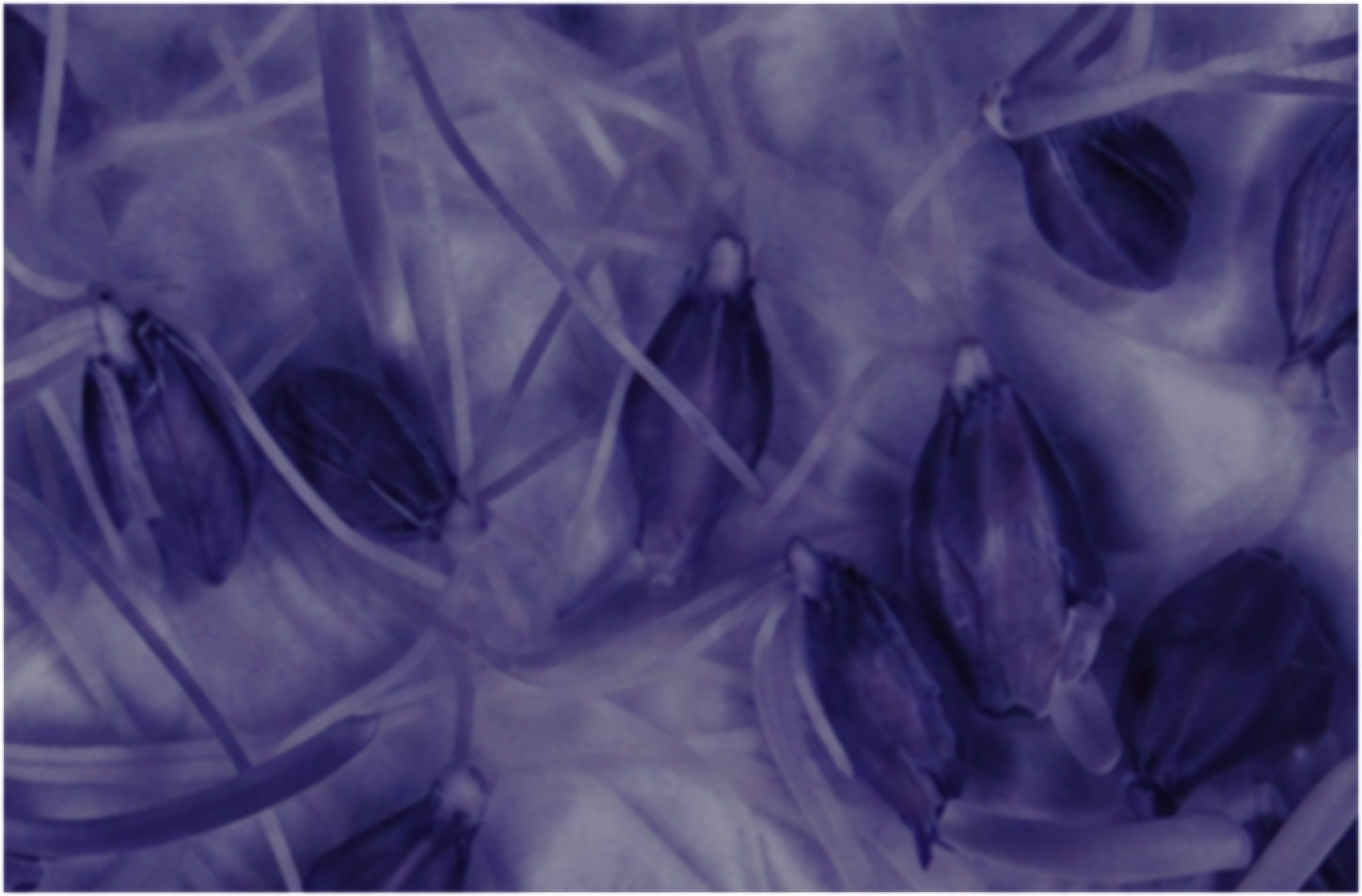



CRL barley trait development program sits at the intersection of genetics, traditional pre-breeding and breeding, sustainability, and brewing performance. The team runs global field trials to understand how barley variants behave across climates, then translates those insights into climate-tolerance and malting quality traits that matter to maltsters, farmers, and brewers. Grain germination energy, grain dormancy, and grain pre‑harvest sprouting are critical signals for malting potential, downstream brewhouse efficiency and farming sustainability, respectively.
The challenge
Manual germination counts are a bottleneck everyone dreads.
To gauge germination energy, technicians inspected thousands of barley grains at various time points, tallying germinated vs. non‑germinated grains and calculating a germination index. The analysis relied on manual scoring and was time-consuming.
“After harvest, the time invested in scoring germination ability was very high (4 people for 3 days)”
— Cynthia Voss, Senior Lab Tech, CRL
Attempts to prototype Do-It-Yourself (DIY) imaging solutions struggled with low contrast and inconsistent lighting conditions. Data capture was fragmented, with counts on paper being inserted into spreadsheets and then transferred to a central data system, making traceability and cross-team visibility difficult. During harvest windows, assays occupied multiple weeks of team availability, limiting capacity for other tasks and reducing overall momentum.
The solution
AI‑assisted germination assessment with the Reshape Smart Incubator
CRL approached Reshape to build a barley‑specific computer vision model enabled by the Smart Incubator. The team captured high‑quality images at the required timepoints, and the AI model learned to (1) recognize barley grain and (2) classify germination state at 24/48/72h. Analysis and data export happen in the same interface: one place to image, quantify, and share.
“We were basically developing something together—define, train, give feedback, improve. It felt pioneering, and honestly, fun.”
Results
From all‑hands counting to a single operator, and a consistent, auditable result.
- Time & staffing
What took multiple people several days now takes one operator about 1 day to image (hands on), with analysis handled by the AI model.
“Now it’s basically just me operating the Smart Incubator, imaging the grain germination and the AI model analyzing them and giving me data. Everyone else can stay on their projects.” - Consistency & reproducibility
By removing cross‑operator subjectivity, the team gained a stable baseline for comparing genotypes, treatments, and field conditions. - Motivation & planning
No more calendar‑blocking “counting weeks.” The work is faster, less tedious, and easier to schedule, freeing time for analysis, experiment design, and greenhouse/field coordination.
FTE time saved per harvest batch: 11 days, ≈2.2 weeks or ≈82.5 hours - Data access
Assays are easy to find and review in the web app. Results export directly to Excel and slot into existing data project folders - zero manual transcription needed.
Why it resonates with food & brewing R&D leaders
1) Standardization where it matters
Germination is a gateway metric for malting quality and for testing barley climate resilience. A consistent, AI‑assisted readout reduces noise across people, timepoints, and sites. A prerequisite for cross‑season and cross‑site comparability.
2) Capacity without headcount
Moving from three‑day manual sessions to a single‑operator hour lets teams redeploy skilled staff to higher‑value tasks (data interpretation, experiment design, field coordination) without sacrificing throughput.
3) Faster program feedback loops
Post‑harvest windows are tight. Automation shortens cycles between phenotype → decision → next experiment, so breeding and quality teams act on signal, not waiting on counts.
4) Easy to use automation and AI
Intuitive automation and AI are significant advantages for day-to-day operator use and change management in the digitization of assays.
What changed in the lab?

Looking ahead
CRL expects broader use across assays and crops (e.g., wheat and potentially yeast applications where imaging can unlock standardized reads). With sequential runs digitized on one platform, the lab is analyzing Reshape generated data—across seasons, genotypes, and environmental conditions—aligned with the CRL long‑term goal of future‑proofing barley for changing climates.
Automate seed germination assays with AI‑ready data.
See how the Smart Incubator and Reshape’s computer vision workflows can standardize your malting, fermentation, and crop assays without adding headcount.