

Mascoma, a Lallemand R&D center, develops microbial products for food, feed, and sustainable fuel applications. Research Associate Sumana Turimella evaluates antimicrobial compounds and enzymes, screening them for activity and efficacy.
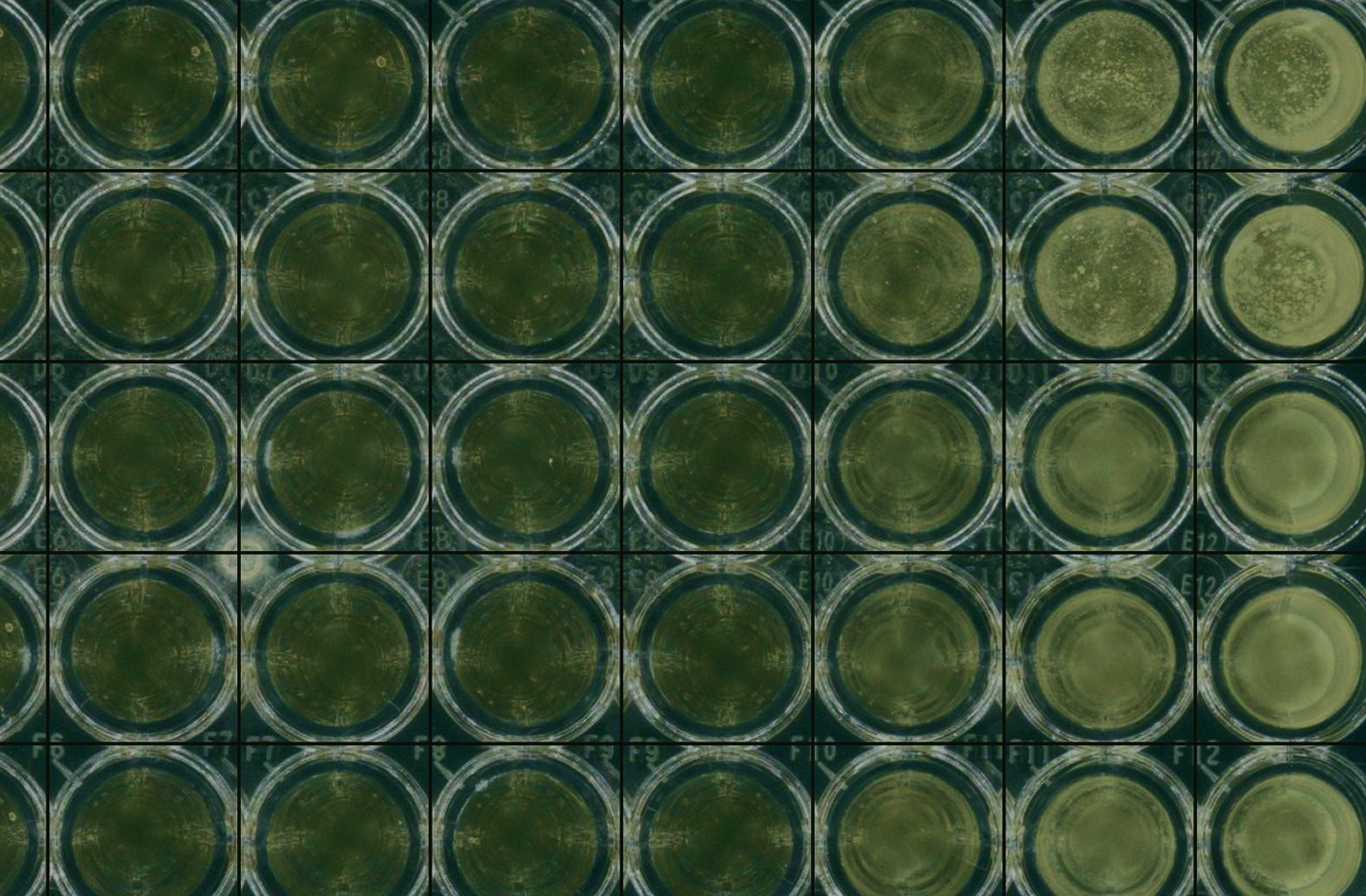
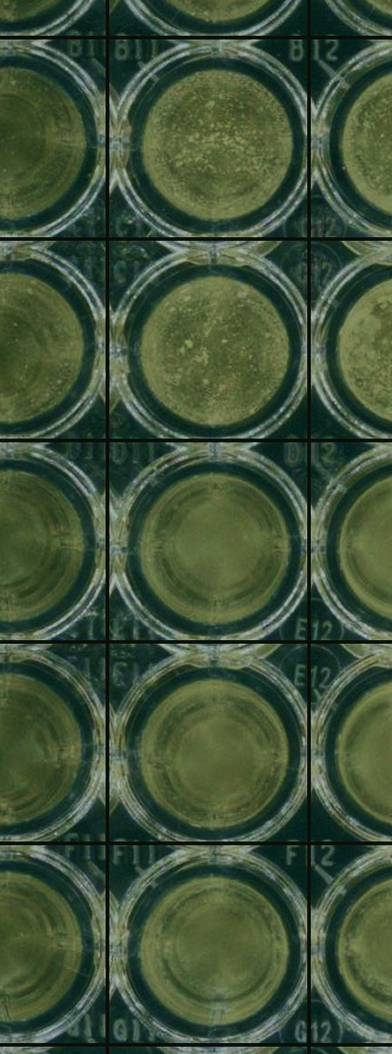
A key part of this work is determining minimum inhibitory concentrations (MICs) against target bacteria and molds. However, these bioassays are time-sensitive, organism-specific, and difficult to scale using traditional plate readers.

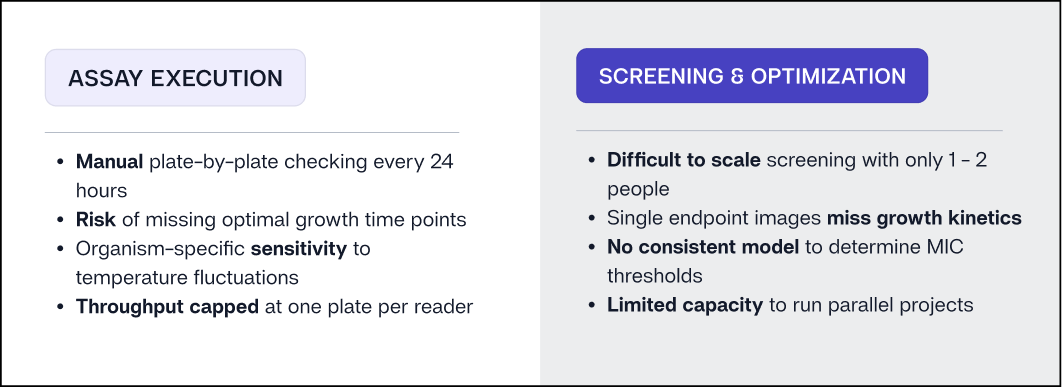
Challenges with MIC assays and microbial growth screening
Antimicrobial screening is a critical but operationally demanding workflow. Every molecule candidate must be tested against multiple target organisms across a range of concentrations - and the results must be captured at precisely the right growth phase. This creates several compounding challenges.
"Every target organism grows differently and even slightly different temperatures will have an impact on its growth rate, it’s a difficult assay to automate"
- Mascoma Research Assistant
Conclusions
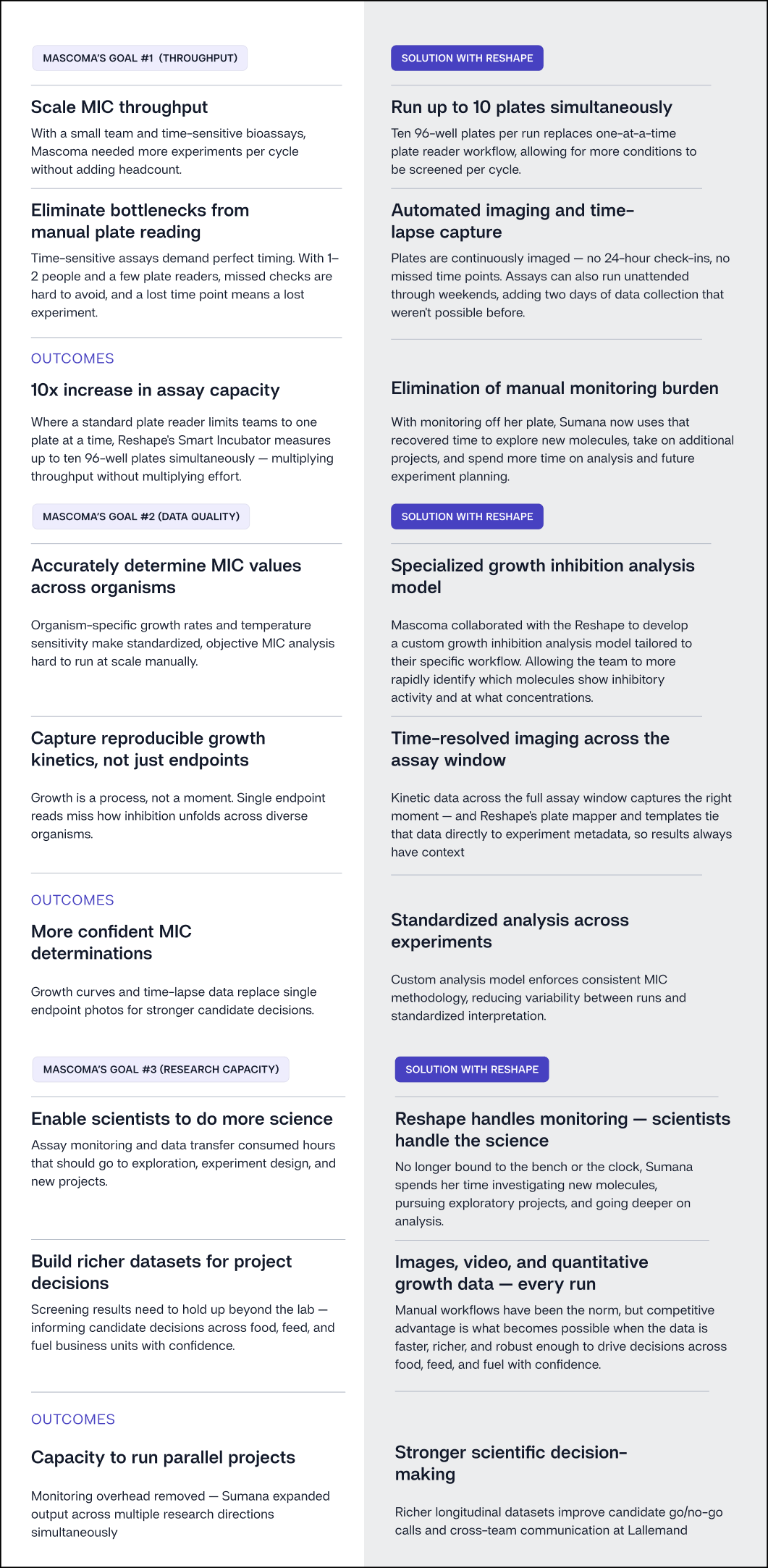
Manual plate checks and single-endpoint data create a hard ceiling on what MIC screening teams can achieve. Reshape removes it, moving Mascoma from one plate at a time to ten simultaneous 96-well plates, with richer data from every run. The result: more experiments per cycle, more robust MIC determinations, and researchers free to focus on what matters. For teams operating across food, feed, and fuel, Reshape is becoming the standard — because faster, richer, more defensible data isn't just good science, it's competitive advantage.
" I'm no longer spending all of my time thinking about one plate "
- Mascoma Research Assistant
Instead, Sumana has been able to take on additional projects, evaluate more candidate molecules, and spend more time analyzing results and planning future experiments.