Many standard assays are repeated routinely in labs, from MIC testing to growth curves, dilution series, and plate-based screening assays. In most cases, you're running the same experiment with only small variations under largely identical conditions, often dozens or even hundreds of times. Yet the setup process rarely reflects that repeatability.
Instead, each new run often starts from scratch: rebuilding plate maps in spreadsheets, copying old layouts, checking notebook scribbles, or relying on memory to recreate a previous setup.
These manual steps do more than slow things down. They introduce opportunities for error, create inconsistencies between runs, and make standardized execution harder to maintain across teams.
The challenge is that these inefficiencies are rarely obvious in isolation and are often accepted as part of standard lab work. Spending a few extra minutes rebuilding a plate map or double-checking well assignments may seem insignificant during a single experiment. But across repeated assays, multiple users, and growing datasets, those small inefficiencies accumulate. Over time, minor variations in setup can quietly impact consistency, reproducibility, and confidence in the resulting data.
Designing digital plate maps was already a step forward
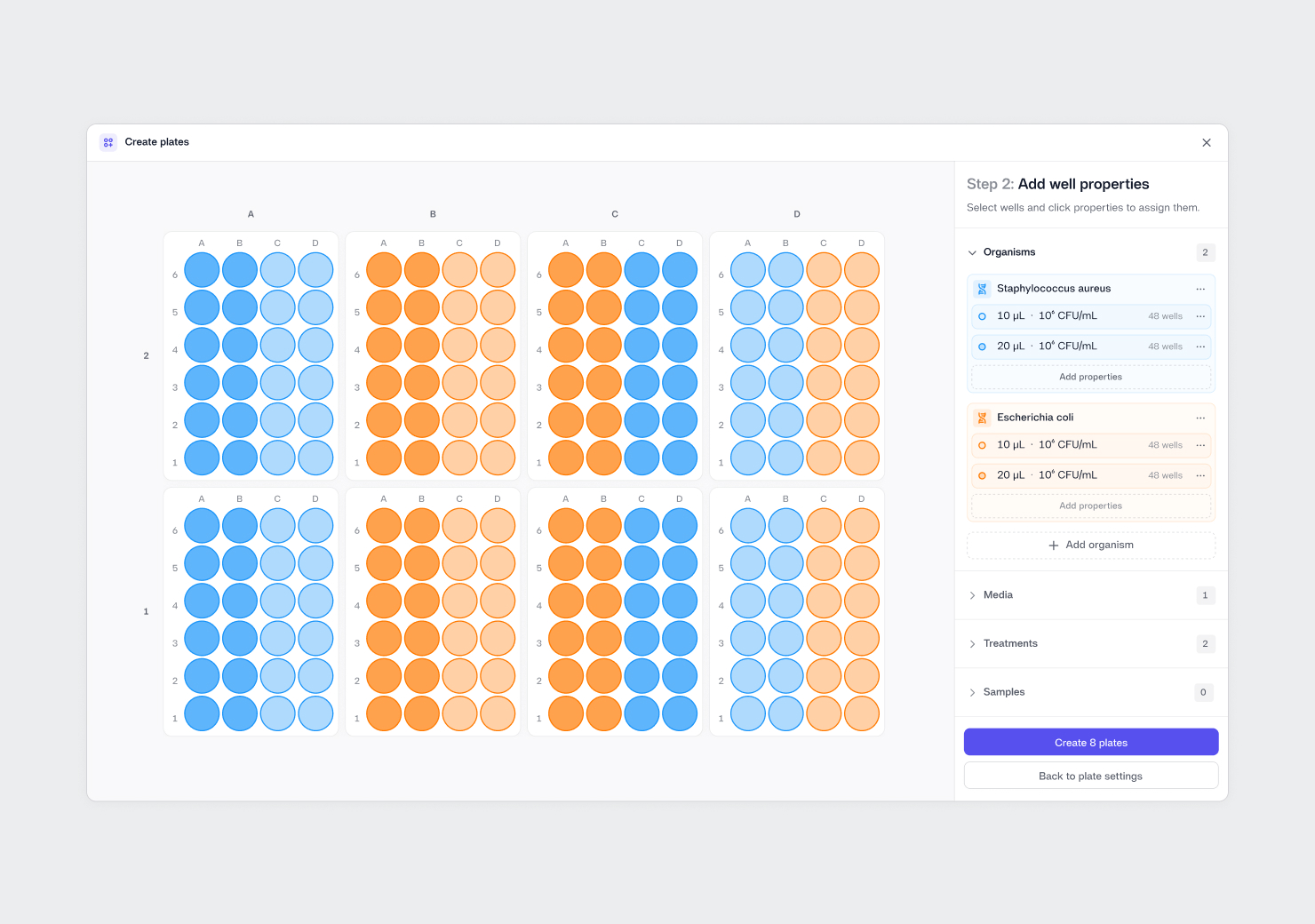
When we introduced Plates, the goal was simple: give scientists a structured, digital way to design plate maps before running an assay. This not only reduces manual setup errors, but also provides a clear visual reference at the bench during experiment preparation and execution.
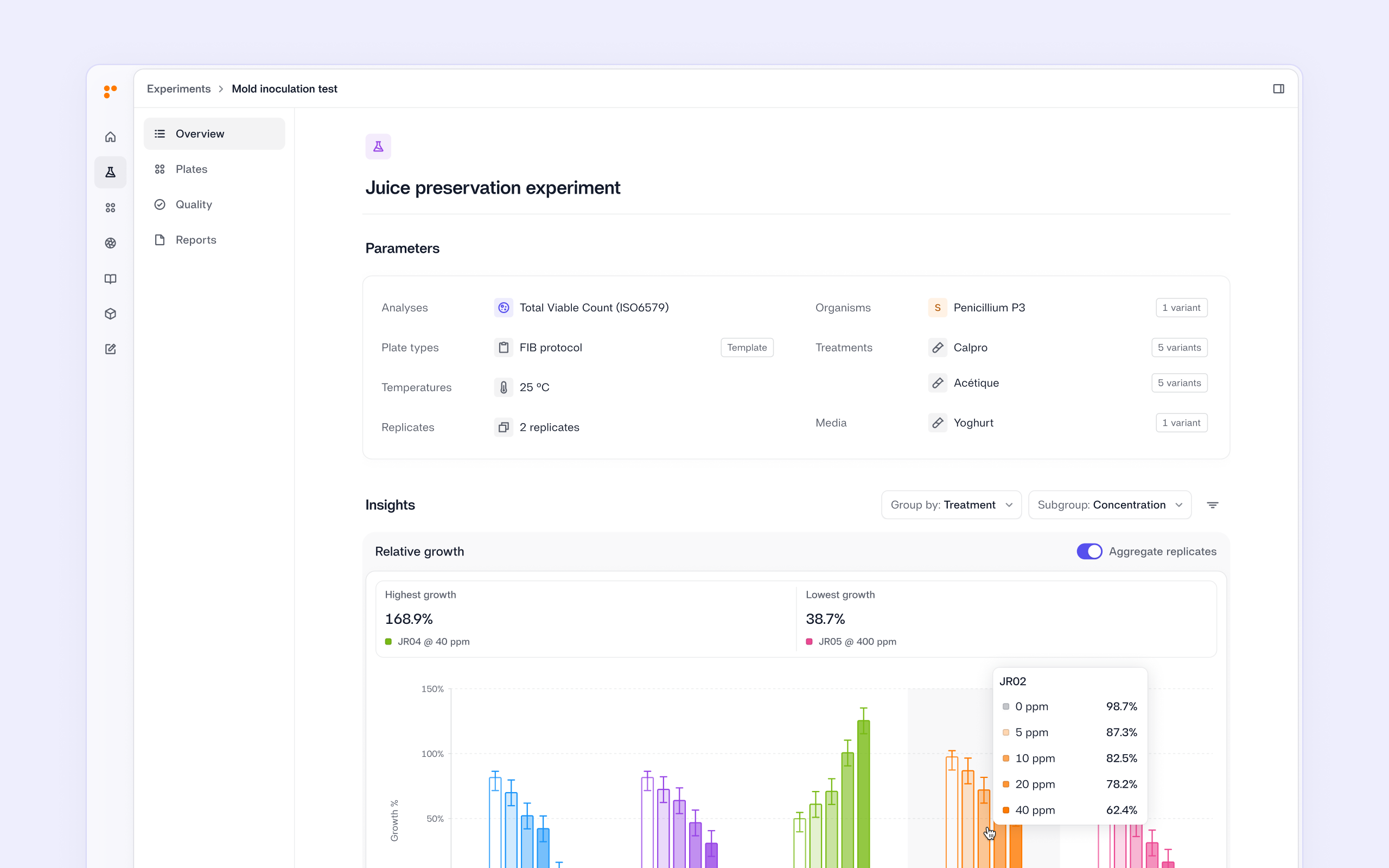
Just as importantly, it improves what happens after the experiment. Because experimental conditions and metadata are attached from the start, results return with full context already in place (no need to manually reformat spreadsheets, relabel conditions, or copy data into downstream analysis workflows). Instead, Reshape can automatically connect analysis results to experimental parameters, making it easier to identify trends, compare conditions, and interpret assay performance over time.
But one important piece was still missing
> Watch our Product Lead, Aimee, walk through Plate Templates
The repeatable assay with small variations in each run should be defined once
That's the idea behind Plate Templates. You define the properties of a plate (organisms, treatments, media, samples, and controls) along with their concentrations and volumes. Then, just save it as a reusable blueprint.
What makes Plate Templates work for repeatable assays is the distinction between what's fixed and what changes. Each property is either a Set Value — locked to a specific entity that never changes, like your growth media — or a Variable, a named placeholder where concentrations and well placement are predefined, but the actual property is chosen at plate creation time.
Templates can be linked directly to an experiment; this allows for the experimental properties to be automatically connected to your plate set-up.
Consistency and accuracy are where the real value compounds
The obvious benefit is time and accuracy. A plate layout that once took 20 minutes to rebuild can now be applied in seconds. Manual data reformatting and copy-pasting steps disappear, reducing the risk of errors while making downstream analysis significantly more efficient.
But the bigger impact is consistency over time.
When the same template is reused across repeated runs of an assay, plate layouts stop drifting between experiments, users, and teams. Experimental conditions remain standardized, and datasets become easier to compare across weeks, months, or even entire projects.
That consistency turns individual experiments into something more valuable: a structured, comparable dataset that supports trend analysis, pattern recognition, and more confident long-term decision-making.
Knowledge that stays in the system
There's a pattern we see in labs that haven't digitized their plate setup: knowledge accumulates in individuals. The person who designed the antimicrobial screening layout knows it by heart. Everyone else asks them.
Templates change that dynamic. Any user can define standard layouts once and make them available to the whole team. That's a small shift in where knowledge lives. The impact compounds over time — for the business, and for everyone in it.
Plate Templates are available in Reshape today.