
Most scientists are meticulous planners. They define their hypotheses carefully, design their conditions with precision, and think hard about controls and replicates before a single pipette is touched.
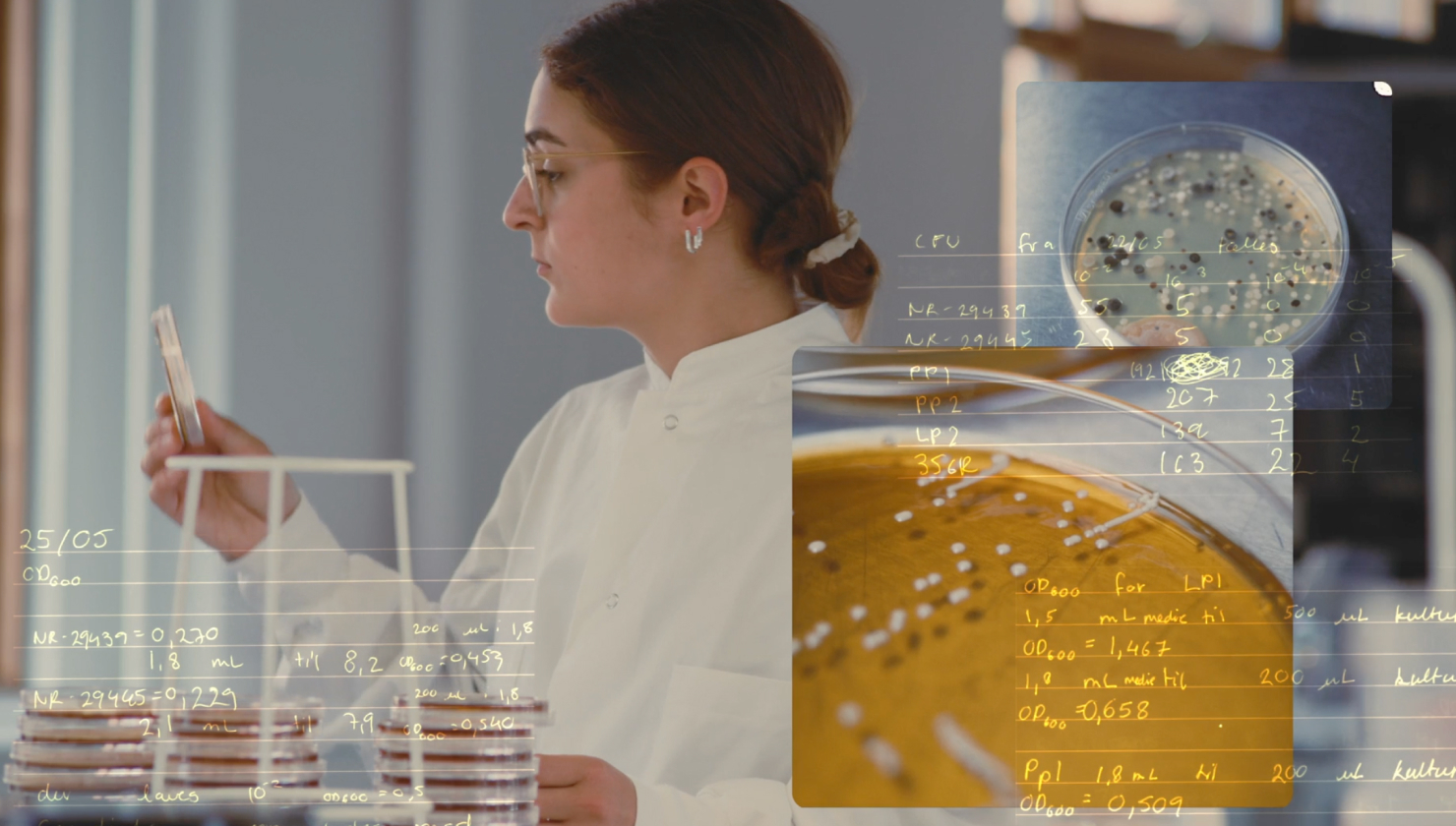
Then the experiment starts. And somewhere between the bench, the long days in the lab collecting data, and the analysis, the context starts to slip.
The treatment concentrations live in one spreadsheet. The plate layout is in another. Different sample names are used for replicate runs. All doesn't quite match the original plan. Six months later, you're staring at the final graph with a question you can't answer: what exactly did we test, and why did it work?
This isn't a failure of scientific rigour. It's a structural problem. Experimental design and experimental results live in different places, and the connection between them often gets lost.
A single thread, from start to finish
Experiments is a new feature in Reshape that keeps that connection intact and creates an infrastructure for you to better perform experiments.
The idea is simple: instead of managing your experimental context across tools, tabs, and team members, you define it once in Reshape, and it travels with every plate, every image, and every result.
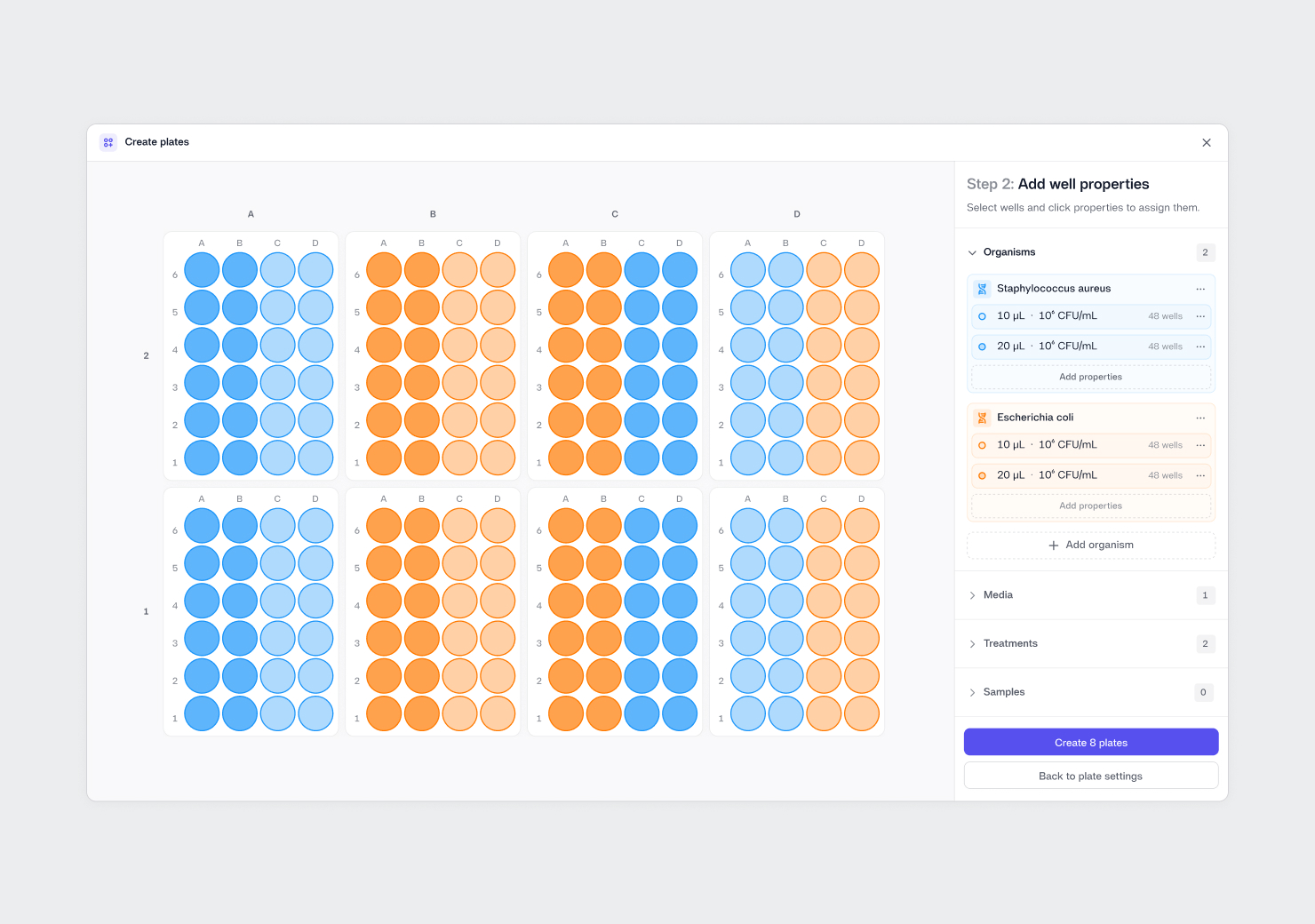
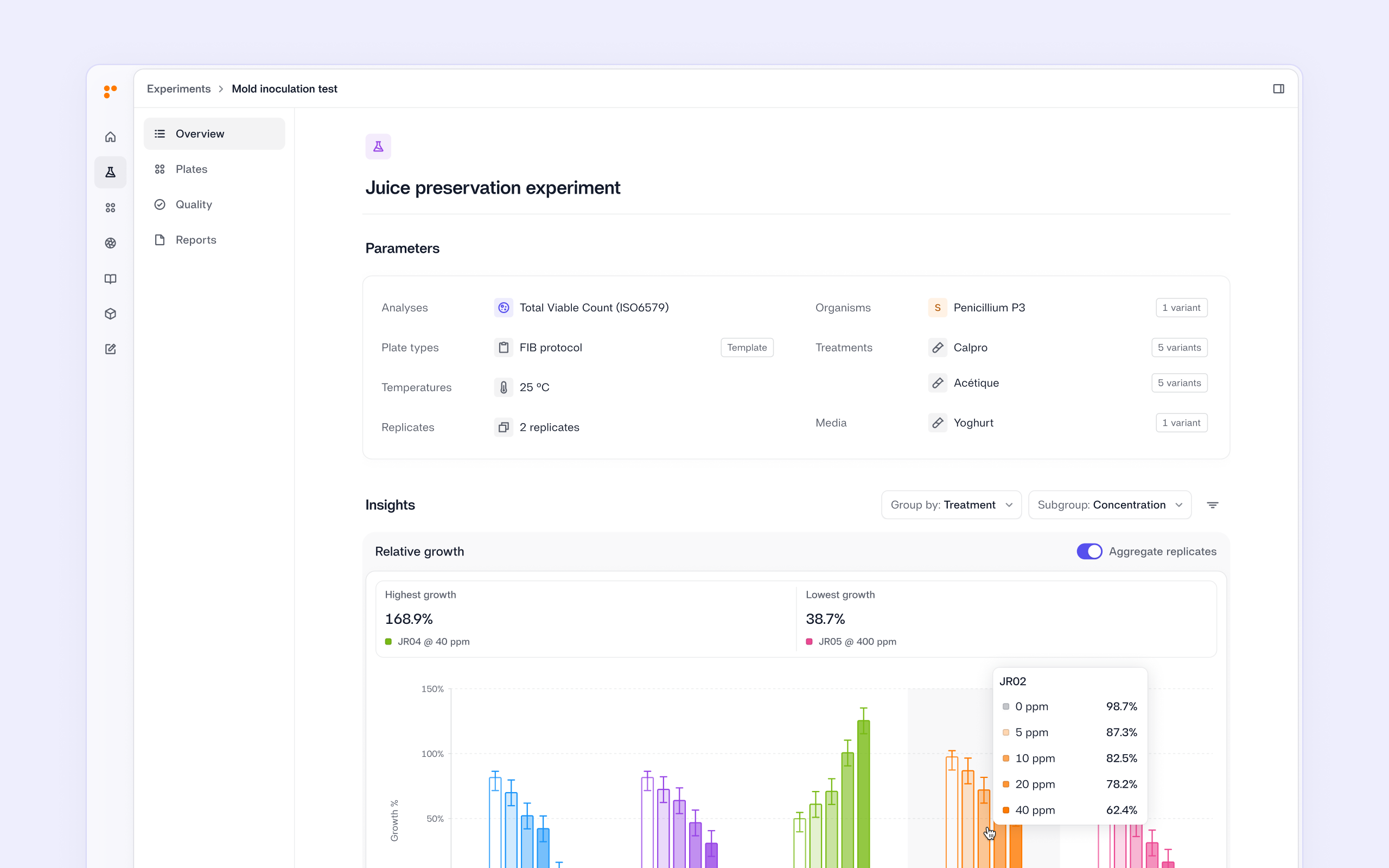
You start by creating an experiment. Give it a name, a hypothesis, an analysis type. Then define the conditions you're testing: organisms, treatments, media, samples. These aren't just labels; they become the metadata that structures everything downstream. Reshape uses them to generate your plate layouts, link your to your images and analysis results, and power the insights you'll see when the results come in.
The experiment becomes the address. Everything that belongs to it lives there: plates, quality checks, insights, and the final report. One place, full context, nothing slipping through the cracks.
The part that usually goes wrong
The hardest moment in any experiment isn't the bench work. It's the interpretation.
You've run the plates. The analysis is done. Now you need to answer the question you started with, and to do that, you need to compare results across conditions, across plates, across replicates. In most workflows, that means pulling data from multiple sources, merging it manually, and hoping the naming conventions held up.
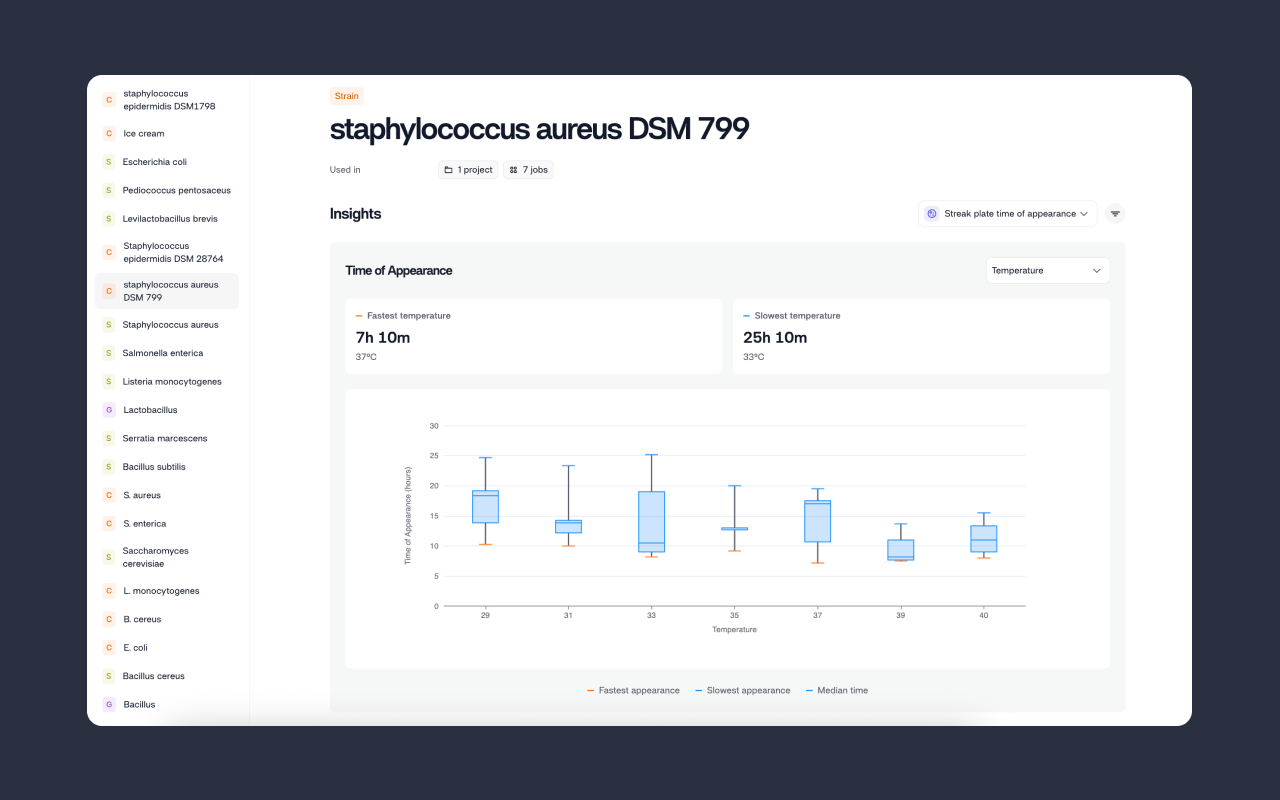
In Experiments, that work is already done. Because the parameters were defined upfront and linked to every well, the insights view can show you exactly what you need: how did each organism perform? Which treatment concentration made a difference? Does the result hold across both media types?
You're not looking at counts per well. You're looking at performance per condition, filtered, grouped, and ready to interpret.
Clean data before you draw conclusions
Before interpreting results, it helps to know they're worth interpreting.
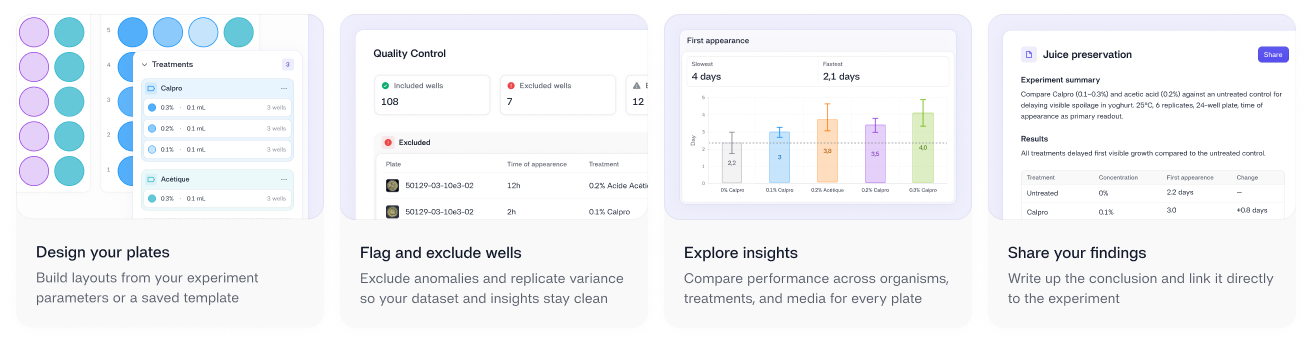
Quality runs in the background throughout every experiment. Anomalies get flagged automatically. Replicate variance gets surfaced so you can see whether your replicates are telling the same story. Any wells that shouldn't be in the analysis can be excluded, keeping your dataset and your conclusions clean.
It's not a step you have to remember. It's just there.
Where the experiment wraps up
The last thing an experiment needs is a conclusion: written down, linked to the data, and findable six months from now.
Reports lets you do that inside Reshape. Write up your findings, link them directly to the experiment and the jobs that produced them, and export as PDF when you're ready to share. The conclusion lives next to the evidence. Not in someone's inbox. Not in a folder nobody checks.
That's the loop closing: from hypothesis to conclusion, in one place, with full context intact throughout.

What's next
We'll keep building Experiemnts out carefully, guided by how teams actually run experiments, not how we imagine they do.
For now, the four pillars are live: plate design, quality checks, insights, and reports. If you're already using Reshape, you can get started right away — just head over to Experiments in the menu.